

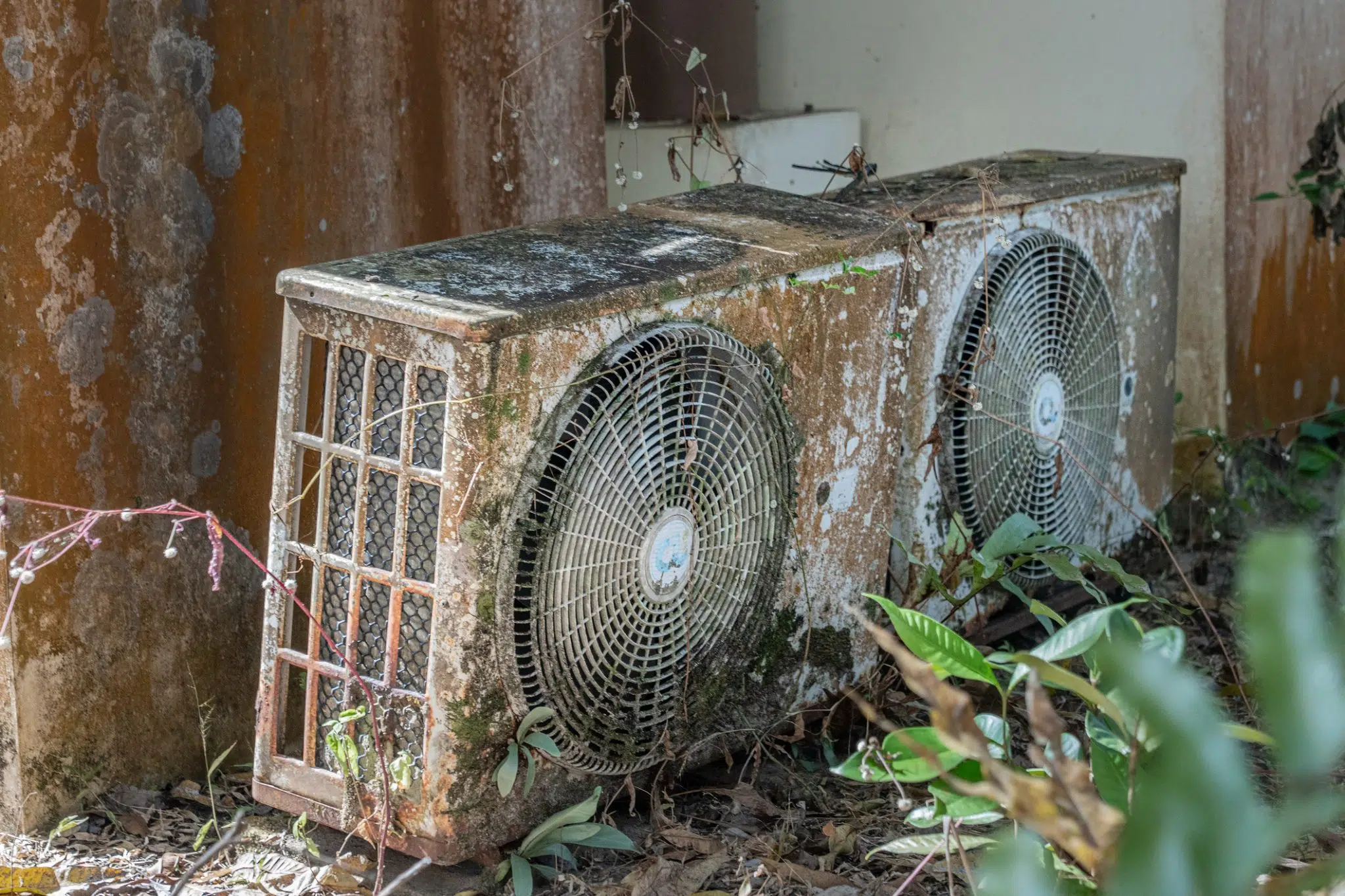
Spring storms in North Texas don’t give much warning. One hour it’s 80 degrees and clear, and the next your neighborhood is under a hail advisory with winds pushing 60 miles per hour. By the time it’s over, there’s debris in the yard, a dent in the fence, and, if you know where to look, possibly real damage to your AC system.
Your outdoor unit sits exposed through every storm that rolls through DFW. It’s built to handle the elements, but hail, lightning surges, and wind debris can do damage that isn’t always obvious right away. Some of it you’ll notice immediately, and some you won’t feel until your electric bill spikes in July. Here’s what to look for and when to call a professional.
AC Storm Damage at a Glance:
- Hail bends condenser fins in ways that hurt efficiency long after the storm passes.
- A nearby lightning strike can fry your control board even if it never hits your house.
- Wind debris can damage a fan blade or throw it off balance without leaving obvious signs.
- Document everything before you call your insurer—photos and a tech assessment protect your claim.
- If your system powers back on after a storm, that doesn’t mean it came through undamaged.
Top 3 Ways Spring Storms Damage AC Systems
Here are three of the most common ways storm damage shows up in the systems we service every season.
1. Hail Impact on Your Outdoor Condenser
Your outdoor condenser takes the full brunt of a hailstorm with zero protection. Even modest hail can bend or flatten the thin aluminum fins lining the unit, restricting airflow and forcing your system to work harder, which shows up as higher energy bills, longer run cycles, and compressor strain over time. Larger hail can also dent the cabinet, damage the fan blade, or crack refrigerant lines, and none of that is a DIY fix.
2. Lightning Surge Damage
DFW sees its share of dramatic electrical storms, and a nearby lightning strike doesn’t have to hit your home directly to fry your AC’s control board, capacitor, or compressor. Sometimes the damage is immediate and your system simply won’t turn on; other times it’s partial, showing up as a unit that trips the breaker, short-cycles, or runs but doesn’t cool. A whole-home surge protector is one of the smartest investments a DFW homeowner can make, but that’s a conversation to have before the next storm.
3. Wind Debris and Physical Impact
DFW wind events can turn tree branches, lawn furniture, and fence boards into projectiles, and your condenser is a stationary target. Debris that enters the unit can damage the fan blade or lodge against internal components, and even a unit that looks fine from the outside can have a thrown-off fan that creates vibration and bearing wear. That kind of damage shortens the unit’s life quietly, long before anything obvious breaks down.
After the Storm Clears, Here’s What to Check

Once it’s safe to head outside, a quick walk-around can tell you a lot before a technician ever shows up. You’re not expected to diagnose anything, just know what you’re looking at.
Look for:
- Visible dents, crushed fins, or bent cabinet panels on the condenser
- Debris on or around the unit, especially anything that may have gotten inside the fan grille
- Disconnected or damaged refrigerant lines (the insulated copper lines running into the unit)
- Standing water pooling around the unit’s base
- Any obvious scorch marks or burning smell near the disconnect box
Then turn the system on and note:
- Does it power on normally?
- Is it cooling the house, or running but blowing warm air?
- Are you hearing any new noises: grinding, rattling, or loud humming?
- Is it tripping the breaker when you try to run it?
Write down or photograph anything unusual. This becomes useful whether you’re filing an insurance claim or just explaining the situation to a technician.
If You’re Seeing Any of This, It’s Time to Call a Pro
Some things are genuinely not worth attempting yourself after storm damage. Call a professional if:
- The unit won’t turn on at all
- It’s running but not cooling
- You see or smell anything that suggests electrical damage
- There’s visible refrigerant line damage (refrigerant handling requires certification)
- The system keeps tripping the breaker
Bent fins along the outer coil are sometimes something a technician can straighten with a fin comb but even that’s worth having a trained eye look at first to assess whether the coil itself took more serious damage.
A Note on the Insurance Documentation Process
Storm damage to HVAC equipment is often covered under homeowners insurance, but the claim process rewards homeowners who document well. A few things that help:
- Photograph everything before you call. Multiple angles of the unit, any visible debris, and the surrounding area. Date-stamped photos from the day of the storm carry more weight than ones taken a week later.
- Get a written assessment from a licensed HVAC technician. Do this before accepting any settlement. Adjusters cover a lot of ground; an HVAC tech who works on these systems daily will catch damage that gets missed or undervalued. Ask for an itemized estimate that breaks out parts, labor, and refrigerant costs.
- Know whether your policy covers ACV or replacement cost. Actual cash value pays the depreciated worth of your unit; replacement cost covers what it actually costs to replace it. That distinction matters when a full condenser replacement runs $3,000 or more.
If the unit is older and storm damage pushes it past practical repair, this is also a good time to have a replacement conversation, especially if the system was already struggling before the storm.
Don’t Let Hidden Storm Damage Sneak Up on You
The honest truth is that some storm damage doesn’t announce itself. A system that turns back on and runs after a hailstorm might be doing so with bent fins reducing efficiency, a capacitor operating at reduced capacity, or a fan blade slightly out of balance. None of those will stop your AC immediately, but all of them shorten how long the system lasts and how well it performs through spring and into summer.
Request Storm Damage AC Repair in DFW
If your system took a hit this spring, don’t wait until a 100-degree afternoon to find out how bad it is. Houk AC has been keeping DFW homes comfortable since 1962, and storm damage assessment is exactly the kind of thing our techs do every day. Schedule a service call, and we’ll tell you exactly where things stand before the heat gets serious.