

It’s before sunrise, and the heater has already been running for hours. The house still feels a little chilly, and you’re standing by the thermostat, wondering how it can be working this hard and still not feel quite warm enough.
A few days later, the utility bill hits your inbox, and the number makes you pause. DFW cold snaps have a way of pushing heating systems to their limits, and even small inefficiencies inside your home can turn into noticeable spikes in your monthly costs. Let’s take a closer look at what’s really happening behind the scenes.
At a Glance
- North Texas cold snaps force heating systems to run longer, which directly drives up energy costs
- Homes 10 to 20 years old often lose heat through settled insulation, worn seals, and leaky ductwork
- Small habits like keeping your thermostat at 68°F and changing your filter monthly can meaningfully reduce your bill
- Closing vents in unused rooms actually makes your system work harder, not less
- If your system is 12 to 15 years old or older, declining efficiency may be the real reason your bill is climbing
What Makes Winter Weather Hit Your Heating Bill So Hard
North Texas winters are hard on heating systems in ways that mild climates never have to deal with. Understanding what’s driving your costs is the first step toward getting them under control.
DFW Temperature Swings Put Your System Under Unusual Pressure
If you’ve lived here long enough, you already know North Texas winters are unpredictable. One week it’s mild and sunny, the next what feels like an Arctic blast barrels through Dallas-Fort Worth and surrounding communities, sending everyone scrambling for extra blankets and cranking up the thermostat.
That kind of sudden temperature swing doesn’t just shock your morning routine; it shocks your HVAC system, too. Because homes in DFW are built to handle intense summers first, when temperatures plunge below freezing, heating systems have to work overtime in a way they rarely do for extended periods.
That sudden strain is often the first reason your average heating bill jumps.
Your Heater Is Running Longer Than You Realize
When a DFW cold snap settles in, your heating system barely gets a break. What usually cycles on and off quietly in the background can start running for much longer stretches, sometimes almost nonstop. All that extra runtime translates directly into higher energy use.
Why Longer Runtime Increases Costs
When temperatures dip into the 20s or below, your system has to work much harder to keep indoor temperatures steady. According to the U.S. Department of Energy, heating and cooling account for the largest portion of energy use in most homes, which means longer runtime directly increases overall consumption.
That increased workload shows up in a few key ways:
- Longer heating cycles that use more gas or electricity
- Auxiliary heat kicks on in heat pump systems, which is far more energy-intensive
- Older equipment is struggling to keep up, especially in 10 to 20-year-old homes
- Higher demand during busy household hours, like early mornings and evenings
If you’re home throughout the day, you’ll likely hear the system running more often. In larger homes, including many in Westlake or Highland Park, maintaining even temperatures across expansive square footage can push systems even harder.
During a true North Texas freeze, that constant operation adds up quickly on your monthly statement.
Your Home May Be Losing More Heat Than You Think
When temperatures drop, your heating system isn’t just warming your home. It’s also replacing heat that’s constantly escaping.
In many 10 to 20-year-old homes across North Texas, insulation has settled and seals have worn down. During a cold snap, those small gaps become a measurable source of heat loss.
Where Heat Commonly Escapes
Energy experts agree that most heat loss in homes happens through gaps in insulation and small air leaks throughout the building envelope. In North Texas homes, warmth commonly escapes through:
- Exterior walls that lack sufficient insulation
- The attic, especially when insulation has settled over time
- Windows that allow heat transfer through glass and small frame gaps
- Doors and other small openings around trim and thresholds
- Leaky ductwork that loses heated air before it reaches your living spaces
If certain rooms feel colder than others, it’s often a sign that warm air is escaping faster than your system can replace it. In larger homes or spaces with tall ceilings, that challenge gets even bigger. When heat keeps drifting out, your system has to work overtime to maintain the temperature, and that extra effort shows up on your monthly bill.
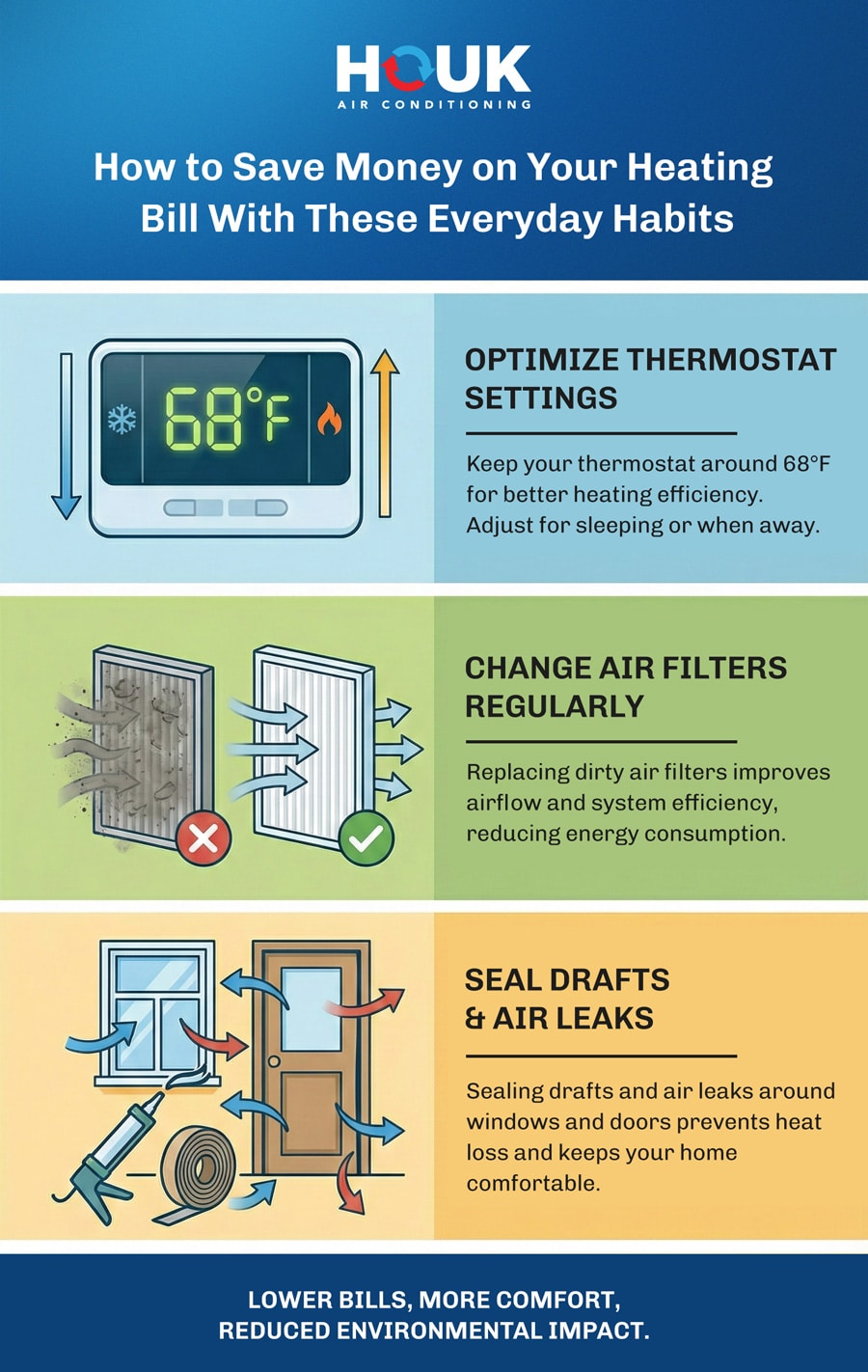
How to Save Money on Your Heating Bill With These Everyday Habits
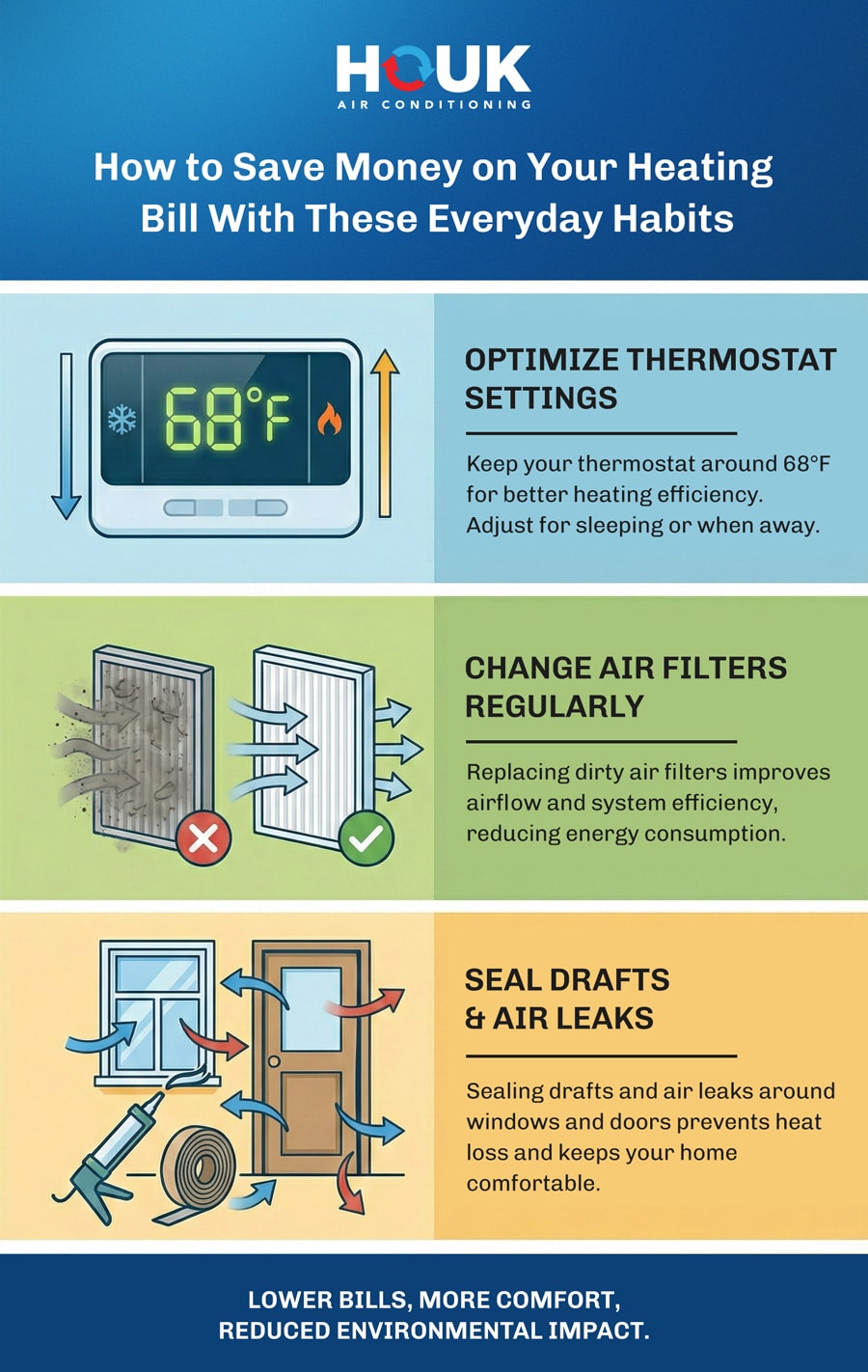
It’s frustrating to feel like you’re doing everything right and still see your utility bill climb. If you’ve been wondering how to save money on your heating bill, small daily habits can make a bigger difference than you think.
1. Keep Your Thermostat at an Efficient Setting
Even small temperature changes can significantly impact heating energy use over time, especially during extended cold stretches. Raising the thermostat to 72 or 74 degrees may feel comfortable in the moment, but a few degrees above 68°F can noticeably increase heating costs over several weeks.
Try this: Keep your thermostat around 68°F when you’re home, and lower it a few degrees overnight or when you’re away. Small adjustments can lead to meaningful savings during a DFW cold snap.
2. Ignoring a Dirty Air Filter
A clogged filter restricts airflow and forces your system to run longer. More runtime means more energy use. Homes with kids or pets often need filter changes more frequently during winter.
Try this: Check your filter monthly and replace it if it looks dusty. It’s a quick fix that supports both comfort and efficiency.
3. Closing Vents in Unused Rooms
It sounds like a smart shortcut, but closing vents can actually make your system work harder. Most HVAC systems are designed to heat the entire home evenly. Blocking airflow creates pressure issues that reduce efficiency.
Try this: Keep vents open and focus on sealing drafts or adding insulation instead. That strategy delivers better results without straining your system.
Is It Just the Weather, or Is Your System Showing Its Age?
Sometimes a higher bill really is about the cold. Other times, it’s your heating system quietly telling you it’s struggling.
In many DFW neighborhoods, homes built 10 to 20 years ago still have their original systems. And while they may still be running, efficiency tends to drop as equipment ages.
Signs Your System May Be Costing You More Than It Should
An aging system doesn’t always break down dramatically. More often, it slowly becomes less efficient.
Watch for:
- The house never feels warm even with the heater running constantly
- Certain rooms stay cooler than others
- Energy bills are noticeably higher than last winter
- The system is 12-15 years old or older
- You’re scheduling more frequent repairs
For families, that can mean inconsistent comfort during busy school mornings. For retirees or those home all day, it can mean ongoing frustration trying to stay comfortable.
In larger or luxury homes, declining efficiency can be even more noticeable because the system has more space to condition.
If your unit is approaching replacement age, it may still function, but it could be using far more energy than a newer high-efficiency model. That difference becomes especially clear during extreme cold in DFW.
Recognizing the signs early gives you more control over costs and fewer surprises when the next freeze hits.
Lower Heating Bills With Help From Houk AC
If your heating bill spiked during the last DFW cold snap, it may be time to have your system professionally checked. Routine heating maintenance can improve efficiency, reduce strain on your system, and catch small issues before they turn into expensive repairs.
A professional tune-up from Houk AC is a smart way to support consistent comfort and better control energy costs while your system is still working hard. With North Texas known for sudden temperature swings, keeping your heating system in top condition can help your home stay comfortable all season long.
Schedule your tune-up today and get your home ready for the temperature swings North Texas is known for.
Serving DFW Families With Proven Expertise and Genuine Care
Houk AC has been serving Texas families for more than 60 years across Big D, Cowtown, and the surrounding DFW communities. We understand local homes, local weather, and what it takes to keep them consistently comfortable.
If you feel like your system needs attention, our team is ready to help with honest recommendations and skilled service. Request heating service, and see firsthand how Houk AC delivers on our promise of expertise backed by genuine care.