

Across the DFW metroplex, the first warm afternoons of spring send many homeowners reaching for the thermostat and a lot of cooling systems firing up for the first time in months. With that wake-up comes a parade of sounds, smells, and quirks that can make a perfectly healthy unit seem like it’s on the verge of breakdown.
Most of those behaviors are completely normal. After a North Texas winter where your
cooling cycle has been mostly dormant, your central HVAC system may need a few cycles to settle in, and the noises and signs it produces during that adjustment period are usually nothing to worry about.
Here’s how to tell what’s part of normal startup, what to keep an eye on, and what actually warrants a call.
At a Glance:
- Most strange AC sounds and smells during the first cool-down of spring are normal.
- Normal noises are soft, brief, and tied to startup or shutdown.
- Abnormal noises are loud, persistent, or new since last season.
- Harmless quirks: long first cycle, outdoor condensate dripping, ductwork popping, soft refrigerant hissing, suction line sweating, brief burnt-dust smell, doors tugging at startup.
- Contact a technician for grinding, screeching, ice on refrigerant lines, musty or burning smells, indoor water pooling, or air that never cools.
HVAC Normal vs Abnormal Sounds: How to Tell the Difference
Most healthy AC systems make some level of background noise. Air rushes through ducts. Metal expands and contracts. Refrigerant moves through copper lines. Fans spin. None of that is unusual on its own.
What separates normal from abnormal AC noises usually comes down to three things: consistency, intensity, and timing. Normal sounds tend to be soft, brief, and tied to the start or end of a cycle. Abnormal sounds tend to be loud, persistent, or new: a sudden grinding, screeching, or banging that wasn’t there last season.
The same logic applies to other behaviors. A little water dripping outside is part of how your AC works. A puddle forming inside your home is not.
With that baseline in mind, here are the 10 behaviors DFW homeowners most often mistake for trouble.
10 HVAC Behaviors Not to Worry About
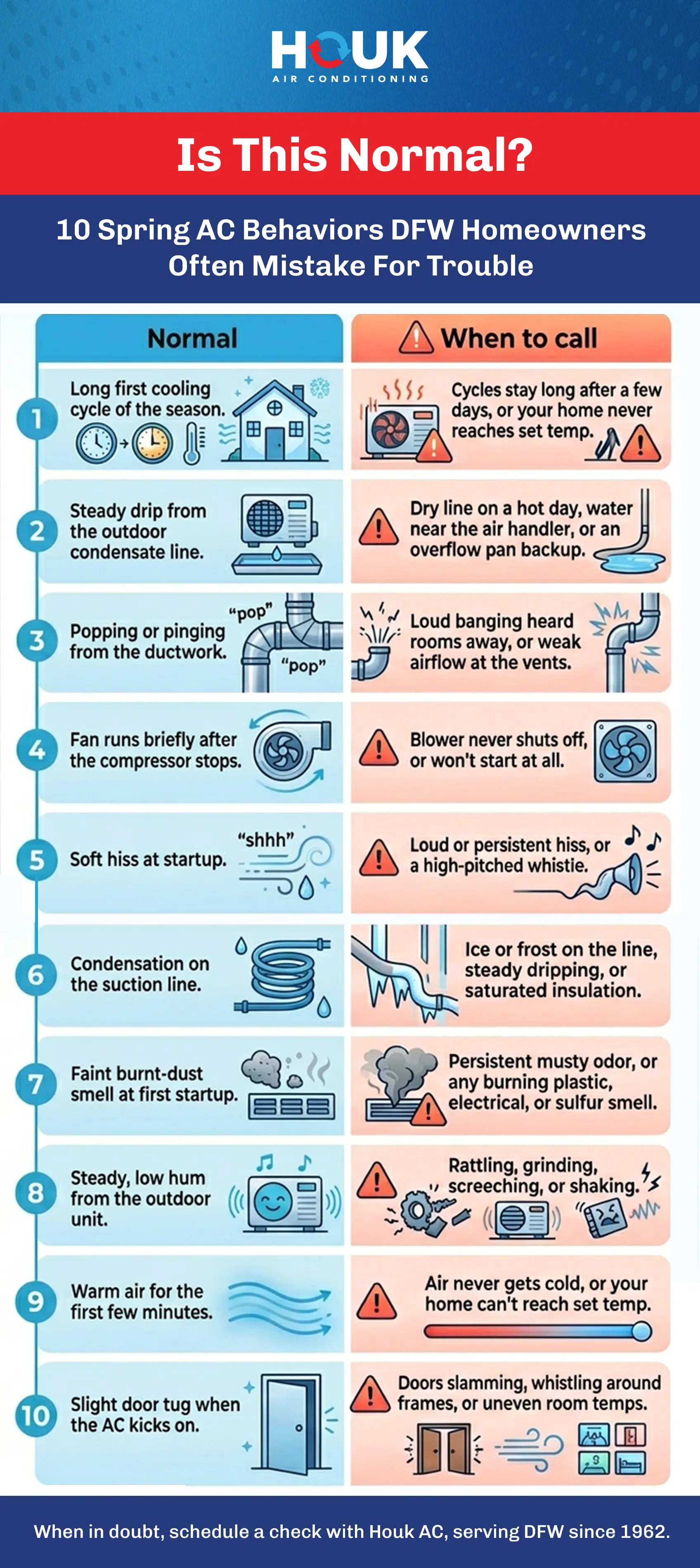
These are arranged roughly in the order you’d notice them, from the moment you flip the thermostat to cool through a full cycle and back to standby.
1. A Long First Cycle When You Switch to Cool
When you switch your system from heat to cool for the first time, that initial cycle can run noticeably longer than what you remember from last summer. Your home has absorbed heat over the winter and from the first warm DFW afternoons, and your AC needs extended runtime to pull all of that out and reach the set temperature. Once your home settles into a steady cool baseline, cycle lengths return to normal.
When to call: If your unit is turning on and off frequently, individual cycles still run unusually long after a few days of regular use, or the system never reaches the set temperature, schedule a diagnostic.
2. Water Dripping From the Condensate Line Outside
The PVC pipe sticking out near your outdoor unit (or the side of your house) is the condensate drain. As your AC pulls humidity out of the air, that moisture has to go somewhere. On a hot, humid DFW day, you can expect a steady drip or trickle from that line.
When to call: A dry condensate line on a hot day, water pooling around the indoor air handler, or a backed-up overflow pan are all signs to bring in a technician.
3. Popping or Pinging From the Ductwork
When your AC kicks on, and cold air starts moving through warm metal ducts, the temperature difference causes the metal to expand and contract. The result is a popping, pinging, or ticking sound, particularly in homes with metal ductwork running through unconditioned attic space, which is common across DFW.
When to call: Popping or banging that’s loud enough to be heard several rooms away, or that’s accompanied by reduced airflow at the vents, may point to disconnected or damaged ducts.
4. The Indoor Fan Running for a Minute or Two After the Compressor Stops
After your system reaches the set temperature and the compressor shuts off, the indoor blower fan often keeps running for another minute or two. This is intentional. The fan is pulling the last of the cooled air out of the system and circulating it through your home, which improves efficiency and comfort.
When to call: A blower that runs constantly, never shuts off between cycles, or refuses to start when the compressor kicks on is a signal that something’s off.
5. Soft Hissing From the Refrigerant Lines
A faint hiss when your system first starts up is usually just refrigerant moving through the expansion valve as the cooling cycle kicks in. It’s a normal part of how the system equalizes pressure.
When to call: A loud, persistent hiss or a high-pitched whistle can indicate a refrigerant leak, which requires a technician certified under EPA Section 608 to handle and recharge.
6. Condensation or Sweating on the Suction Line
The larger of the two copper lines running between your indoor and outdoor units is the
suction line, and it carries cold refrigerant. On humid DFW days, you may see beads of water or a damp sheen on the insulation around that line. Cold refrigerant cools the insulation, and warm humid air condenses against it. That’s normal.
When to call: Actual ice or frost on the line, water dripping in a steady stream onto your floor or attic, or insulation that stays saturated all the time should be inspected. Ice on the line usually points to low refrigerant or restricted airflow.
7. A Burnt-Dust Smell During the First Cooling Cycles
When your AC fires up for the first time in months, it’s burning off dust that settled on coils, heat exchangers, and blower components over the winter. That can produce a faint burnt-dust smell during the first few cycles. It typically fades within an hour or two of runtime.
When to call: A persistent musty or moldy smell (which can signal mold in the ductwork or evaporator coil), or any smell of burning plastic, electrical components, or sulfur should be treated as urgent.
8. Humming or Vibration From the Outdoor Unit
A steady, low hum from the outdoor condenser is the sound of the compressor and condenser fan doing their job. It’s normal background noise and tends to be more noticeable on quieter spring days before summer cicadas and yard equipment kick in.
When to call: A loud rattling, grinding, or screeching sound from the outdoor unit, or vibration strong enough to shake the unit on its pad, suggests a loose component or failing motor.
9. Warm Air for the First Few Minutes After Startup
When your AC first turns on, the air coming out of your vents may feel warm or just barely cool for the first few minutes. The system needs time to pull heat out of the air and circulate cold refrigerant through the coils. Cool air should arrive within the first several minutes of runtime.
When to call: If the air never gets cold, only blows lukewarm air across an entire cycle, or your home consistently can’t reach the set temperature, it’s time for a diagnostic.
10. Doors Tugging Slightly When the System Kicks On
If you’ve ever felt a door pull toward its frame the moment your AC turns on, that’s a pressure shift caused by the blower starting to move air. It’s most noticeable in homes with central return vents and closed interior doors. A small tug is normal.
When to call: Doors slamming shut on their own, whistling around door frames, or noticeable differences in temperature from room to room can point to a duct imbalance or return-air issue.
The Bottom Line
A new sound, smell, or quirk doesn’t automatically mean your AC is in trouble. After a long DFW winter where your cooling cycle has been mostly dormant, your system is essentially waking up, and a lot of what it does in those first few cycles falls squarely on the normal side of the line.
Pay attention to what changes over time. Behaviors that fade after a few cycles or only show up at startup are usually nothing to worry about. Behaviors that get louder, more frequent, or come with reduced cooling are worth a closer look.
Still Wondering Why Your AC Is Doing Something Strange? Schedule Service With Houk AC in DFW
Serving the Dallas-Fort Worth area since 1962, Houk AC has helped generations of DFW homeowners tell the difference between normal AC quirks and real problems. If something you’re hearing, smelling, or seeing didn’t make our list, it’s worth a professional set of eyes.
Houk AC’s Maintenance Program members get a 27-point inspection, a 15% discount on repairs, FastTrack priority scheduling, no after-hours charges, and a free diagnostic within 30 days. Schedule a visit today and start the cooling season knowing your system is ready for whatever a Texas summer brings.