You already know when to flip the thermostat from heat to cool. The harder question is whether your AC is actually ready when you do.
Most cooling systems in DFW have been sitting idle since late October. That’s four to five months where dust has settled on internal components, electrical connections have loosened, and condensate drain lines have dried out and started collecting algae. None of it is visible from the hallway, and none of it announces itself until the system struggles on its first real cooling day.
Let’s talk about what to do before you switch your unit from heating to cooling, so your system performs the way it should from the first cycle.
At a Glance
- Four to five months of idle time can leave dust, loose connections, and drain line buildup inside your system
- Your outdoor condenser needs hands-on attention after a full winter of debris exposure
- A clogged condensate drain line is one of the most common spring AC service calls in DFW, and it’s preventable
- Scheduling a professional tune-up lets you catch refrigerant leaks, electrical issues, and worn components that aren’t visible from the outside
- Houk’s Spring AC Readiness Checkup runs through March 31
What Happens to Your AC During the Off-Season
It’s easy to assume a system sitting idle is a system that’s fine. But dormancy creates its own problems. While your AC sits unused through winter, a few things are quietly happening inside:
- Dust and debris settle on evaporator coils and blower components, reducing airflow efficiency before the first cycle even starts
- Capacitors and electrical contacts weaken through months of temperature swings without use, especially in components that were already aging
- Condensate drain lines dry out and become a breeding ground for algae, which causes clogs once moisture returns during cooling season
In homes built 10 to 20 years ago across DFW, these effects compound on top of existing wear. Spring 2026 is expected to run warmer than normal across North Texas, with highs climbing from the low 70s in March to near 90 by May. That timeline doesn’t leave much room for trial and error, which is why spring AC maintenance in DFW matters more than almost anywhere else.
How to Prepare Your AC for Spring: The Hands-On Checklist
These steps go beyond switching your thermostat mode and checking your filter. If you’ve already handled those, this AC tune-up checklist picks up where most advice stops.
1. Clear & Clean Your Outdoor Condenser Unit
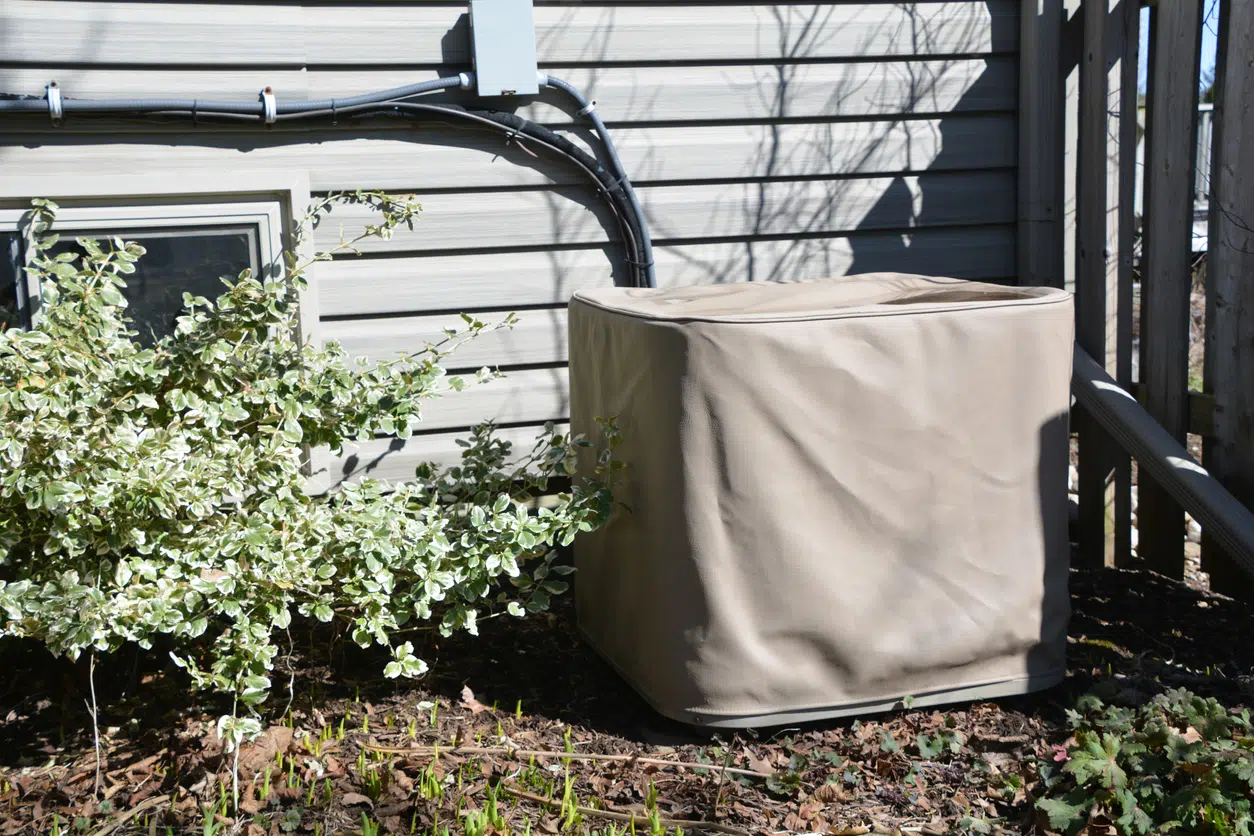
Your condenser has been exposed to months of winter storms, wind, and fallen leaves. Branches, dirt, and mulch can pack against the fins and block the airflow your system needs to release heat.
Clear at least two feet of space on all sides. Rinse the exterior fins with a garden hose, spraying from the inside out to push debris away rather than deeper into the unit. If the fins are visibly bent, a fin comb can straighten them and restore airflow.
This is one of the highest-impact things a homeowner can do before calling a pro.
2. Flush Your Condensate Drain Line
This is the step most homeowners skip because most don’t know it exists. Your AC removes moisture from the air as it cools, and that moisture exits through a small PVC pipe near your indoor unit. After months of sitting dry, algae can form inside and cause a clog once the system starts producing condensation again.
Pour a cup of distilled white vinegar down the drain line opening once a month during cooling season. Thirty seconds, almost no cost, and one less service call.
3. Inspect All Vents & Registers
Walk room by room and confirm every supply and return vent is open, unblocked, and clean. During winter, furniture and rugs sometimes end up covering vents without anyone noticing.
Blocked vents create pressure imbalances in your ductwork. Your blower pushes the same volume of air regardless, so when vents are obstructed, the result is uneven cooling, increased strain, and higher energy use.
4. Check for Visible Issues Around Your Indoor Unit
Take a quick look at the area around your indoor air handler or furnace. Check for water stains, rust, or residue near the base of the unit or around the drain pan. Look at the refrigerant lines running to and from the unit. Frost or ice on those lines when the system is running is a sign of a refrigerant or airflow problem that needs professional attention.
5. Confirm Your Outdoor Disconnect Is On
Many homes have an electrical disconnect box near the outdoor unit that sometimes gets switched off during winter. If your system won’t respond when you set it to cool, check the disconnect before assuming something is broken. It’s a two-second fix that can save you an unnecessary service call.
What a Professional Spring Tune-Up Adds
Your checklist handles what’s accessible, but the components that matter most are the ones you can’t safely evaluate on your own.
What a Spring Checkup Covers
During a Spring AC Readiness Checkup, our technicians go beyond the surface to inspect:
- Refrigerant levels: low charge means your system works harder to cool and may indicate a leak
- Electrical connections and capacitors: loose wiring or weakened components can cause intermittent failures or a full shutdown when demand spikes
- Evaporator and condenser coil condition: dirty coils reduce heat transfer and cooling capacity
- Blower motor performance: a technician can measure amp draw to confirm it’s operating within spec, not just running
- Thermostat calibration: even a few degrees of drift affects comfort and efficiency
- Condensate drain system: deeper blockages, drain pan condition, and safety float switch function
Why It Matters
That kind of diagnostic work gives you the chance to address problems on your schedule, not in the middle of a July heat wave.
According to the Department of Energy, systems that aren’t regularly maintained can use up to 25% more energy. For a system that accounts for nearly half your home’s energy use, that gap adds up fast across a DFW summer.
Common Spring AC Myths
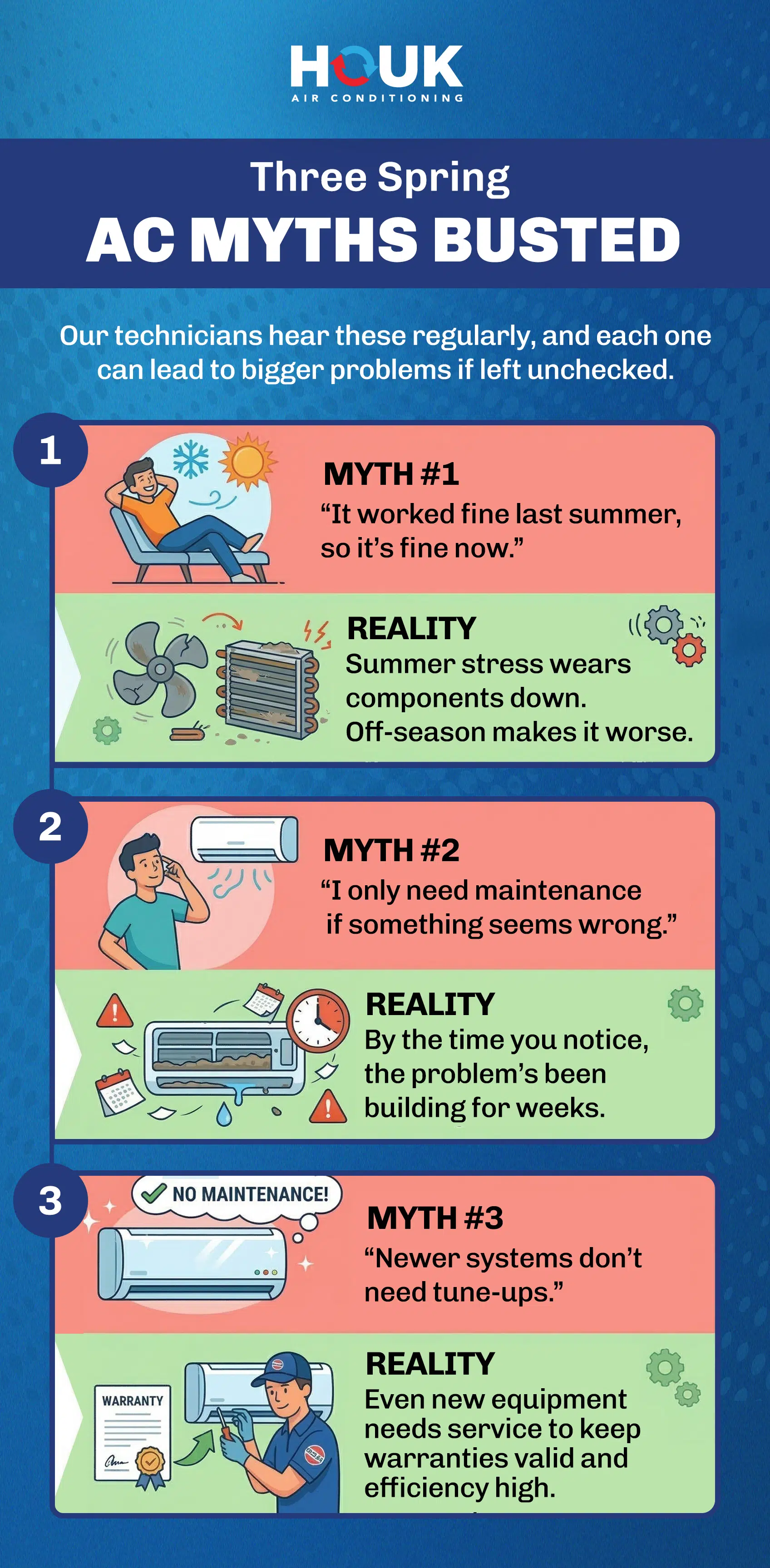
Our technicians hear these regularly, and each one can lead to bigger problems if left unchecked.
Myth #1: “It worked fine last summer, so it’s fine now.”
An AC that ran all summer was under sustained stress. Components that were borderline in September may have degraded further during the off-season.
Myth #2: “I only need maintenance if something seems wrong.”
By the time you notice a problem, the underlying issue has usually been developing for weeks. Preventive maintenance catches it when it’s inexpensive to fix.
Myth #3: “Newer systems don’t need tune-ups.”
Even brand-new equipment benefits from routine service. It keeps manufacturer warranties valid, ensures peak efficiency, and catches installation-related issues before they become costly.
Get Ahead of Summer With Houk
Houk’s Spring AC Readiness Checkup is available through March 31, performed by certified technicians who know DFW homes inside and out. Schedule your checkup today and get ahead of the rush.
Want year-round coverage? Ask about the Houk Maintenance Program. Members receive semi-annual precision tune-ups, a 15 percent discount on repairs, priority scheduling through FastTrack, no after-hours charges, and a free diagnostic within 30 days of their last tune-up.
Serving Dallas-Fort Worth Families With Reliable HVAC Service & Genuine Care
Houk AC has been serving Texas families for more than 60 years across Big D, Cowtown, and the surrounding DFW communities. We understand local homes, local weather, and what it takes to keep them consistently comfortable.
Whether your system needs a seasonal checkup or you’re wondering if it’s time for an AC upgrade, our team is ready. Request AC service today, and experience the difference that honest recommendations and skilled service make.