The best time to find out your heater has a problem is on a 70-degree November afternoon, not at 2 a.m. during the first freeze. A fall tune-up gives DFW homeowners that head start, catching a worn igniter, a clogged filter, or a struggling heat pump while there’s still time to fix it on your schedule.
But what that tune-up covers depends on what heats your home. Gas furnaces and heat pumps work differently, so this checklist walks through each one separately.
Heating System Maintenance Checklist at a Glance
- A fall tune-up finds small heating problems before the first freeze exposes them
- For gas furnaces, the focus is safe ignition, clean burners, and carbon monoxide protection
- For heat pumps, the focus is the outdoor unit, the defrost cycle, and how often backup heat kicks in
- Changing filters, testing thermostats, and keeping the area around the equipment clear are easy jobs for homeowners
- Gas, combustion, electrical, and refrigerant work should always go to a licensed technician
Furnace Tune-Up Checklist for Gas Systems
A gas furnace burns fuel inside the home, so its tune-up covers safety as much as comfort. Start with the homeowner checks, then compare the technician list against what your last service visit actually included.
What to Check Before the First Cold Night
- Look at the air filter: Hold it up to a light. If very little light passes through, replace it before the furnace runs for the season.
- Test the thermostat: Switch it to Heat and raise the setpoint a few degrees above room temperature. Warm air should reach the vents within a few minutes. Replace thermostat batteries now rather than during a freeze.
- Watch the ignition sequence: On most modern furnaces, the inducer fan starts first, then the igniter glows or sparks, then the burners light. Repeated clicking with no flame, or burners that light and shut off within seconds, can point to an ignition or flame sensor problem.
- Check the burner flames: Look through the viewing window and leave the access panels in place. Healthy gas flames burn mostly blue. Yellow, lazy, or flickering flames, or soot near the burners, call for a technician.
- Clear the area around the unit: Paint cans, cleaning supplies, and stored boxes don’t belong next to a gas appliance. Garage and closet furnaces tend to collect clutter over the summer.
- Test the carbon monoxide alarm: Press the test button and replace the batteries. Replace the alarm itself if it’s past the expiration date printed on the back.
What a Houk Technician Covers
The professional side of a furnace tune-up involves gas, combustion, and electrical components that homeowners shouldn’t open up. The U.S. Department of Energy lists the following checks as work for a heating professional:
- Inspecting the heat exchanger for cracks or corrosion
- Cleaning the flame sensor and testing the igniter
- Cleaning the burners and checking gas input and flame characteristics
- Testing for carbon monoxide and confirming the vent pipe and flue exhaust properly
- Testing safety controls such as the high-limit and pressure switches
- Cleaning and lubricating the blower and checking motor performance
- Clearing the condensate line on high-efficiency furnaces
- Tightening electrical connections and checking the control board
Carbon monoxide is why the furnace checklist carries extra weight. DOE notes that a leaking furnace heat exchanger mixes combustion gases with household air, which can lead to CO poisoning. Those cracks are rarely visible from the outside, which is why the heat exchanger inspection belongs on the technician’s list. If your furnace has already been through an outage or a hard freeze, check that it’s safe to run before relying on it.
Heat Pump Maintenance Checklist
Heat pumps move heat instead of burning fuel, so there’s no flame or flue to inspect. Instead, the tune-up focuses on the outdoor unit, the refrigerant, and the controls that decide when backup heat turns on. DOE recommends professional service at least once a year and estimates that a well-maintained heat pump can use 10% to 25% less energy than one that’s been neglected.
What to Check Before the First Cold Night
- Clean or replace the filter: DOE suggests every three months or on the manufacturer’s schedule. A heat pump runs in summer and winter, so its filter never gets a season off.
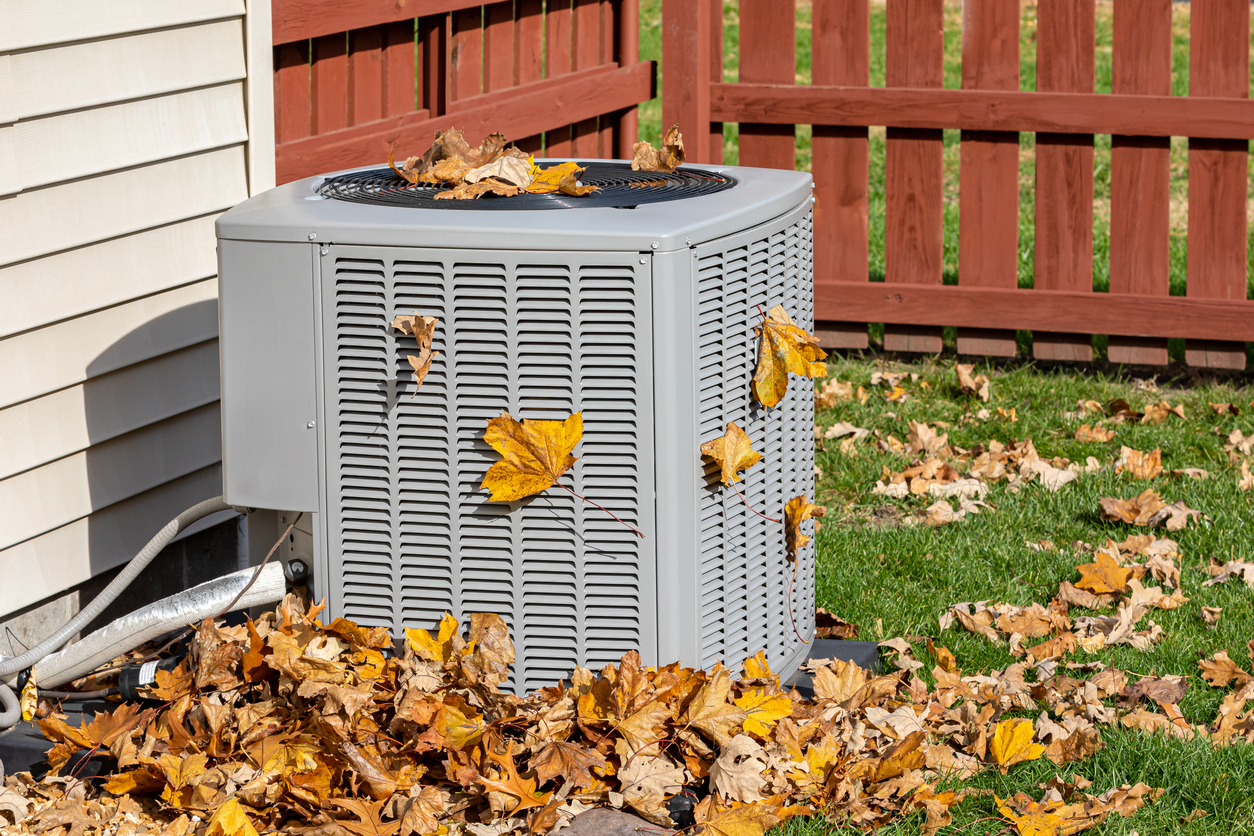
- Clear the outdoor unit: Shut off power to the unit first. Then remove leaves, grass clippings, and debris from the coil and the ground around it, and trim back shrubs so air can move freely.
- Clean indoor registers: Dust the supply and return registers and keep furniture and rugs from blocking them.
- Confirm the thermostat mode: The system should be set to Heat, not Emergency Heat. Emergency Heat runs only the backup heat strips and skips the heat pump entirely.
- Learn what a normal defrost looks like: In cold, damp weather, frost forms on the outdoor coil, and the system briefly reverses to melt it. Steam rising from the outdoor unit and a short pause in warm air are normal. A coil that stays coated in ice for hours is not.
- Notice how often “Aux” appears: Auxiliary heat showing up constantly on a mild day can be an early sign the heat pump is struggling.
What a Houk Technician Covers
- Measuring refrigerant charge and checking for leaks, which requires EPA Section 608 certification
- Measuring airflow and inspecting the blower, indoor coil, and ducts
- Testing the defrost control, defrost sensor, and reversing valve
- Testing the auxiliary heat strips and when they turn on
- Inspecting electrical terminals and testing capacitors and contactors
- Lubricating motors where applicable
- Confirming the thermostat works correctly and that heating shuts off when the thermostat calls for cooling
Auxiliary heat deserves a close look during the visit. DOE notes that backup heat, such as electric resistance strips, usually costs more to run than the heat pump itself. Strips that turn on too early or too often can raise a winter bill without any obvious change in comfort.
When to Schedule a Heating Tune-Up in DFW
Here in North Texas, a warm October afternoon can turn into a 35-degree night with almost no warning. That’s why fall is the time to book a heating tune-up, ideally before the first cold front moves in. The U.S. Department of Energy also recommends having furnaces checked in the fall, so the system is ready before it has to work hard.
A twice-yearly maintenance plan puts that fall visit on the calendar for you, along with a spring cooling tune-up. It also keeps your warranty in good standing, since most manufacturers require annual maintenance to honor it. That means one appointment takes care of both your equipment and your warranty.
Two Systems, One Goal: A Warm House All Winter
Furnaces and heat pumps take different routes to a warm house, so it makes sense that their tune-ups look different too. The homeowner checks take just a few minutes and catch the obvious problems early. The technician’s work goes deeper into the combustion, refrigerant, and electrical components that keep a system running safely when temperatures drop.
Your heating system is only part of getting ready for winter, though. These Texas winter HVAC tips cover the rest, from sealing drafts to protecting your pipes before a hard freeze.
Ready to Book a Heating Maintenance Visit in DFW with Houk AC?
Since 1962, Houk Air Conditioning has kept North Texas homes warm through every kind of cold snap. Our heater maintenance visits cover gas furnaces and heat pumps, so your system gets the right checks no matter what type it is.
To stay ahead of it all year, the Houk Shield Program includes a 27-Point Precision Tune-Up every spring and fall, plus priority scheduling and no overtime fees. Call (833) 844-1962 or book online to get your heating system ready before the next blue norther arrives.