

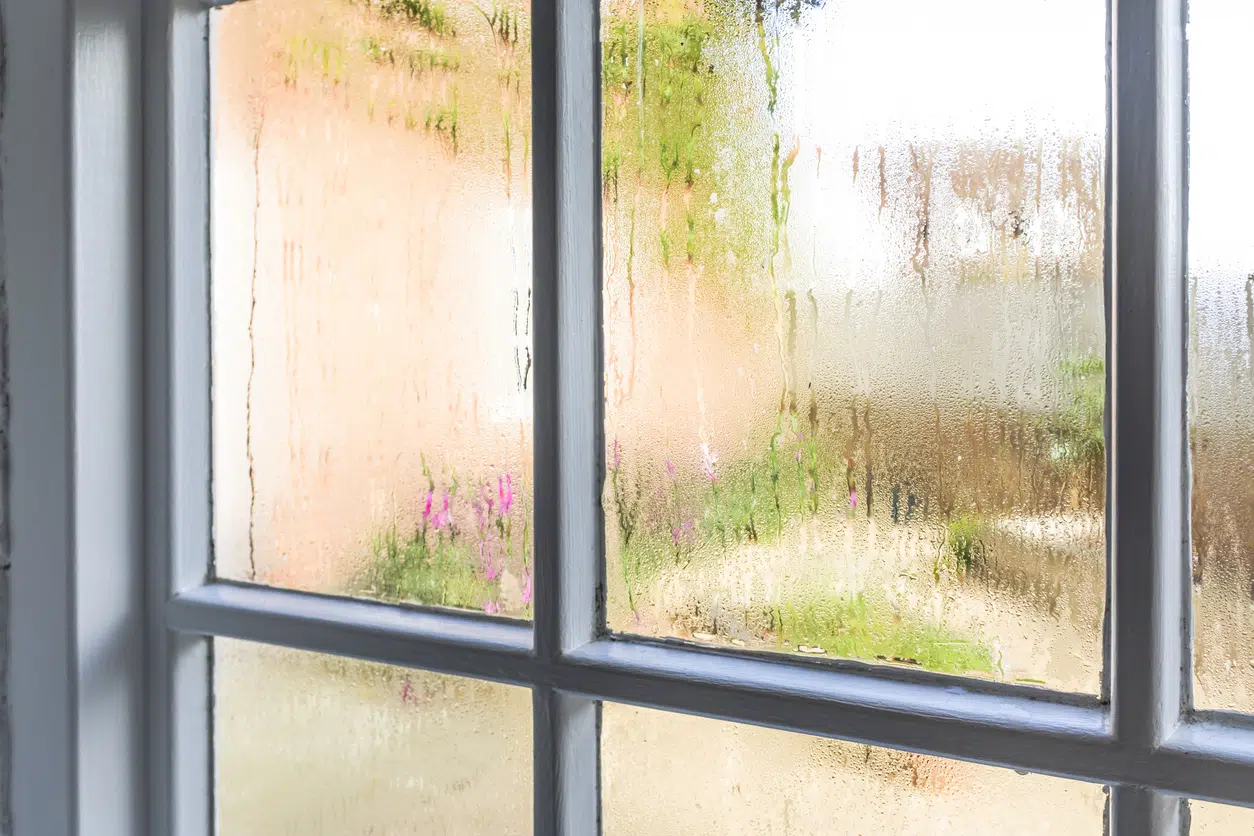
Every summer, the same questions start showing up across DFW neighborhood groups and search bars. Why are my ducts sweating? Is that puddle under my AC normal? Why does the house feel clammy even though the thermostat says 74? If you’ve found yourself Googling any of this at midnight while staring at a damp vent, you’re not alone, and you’re probably fine.
Summers in the Dallas-Fort Worth metroplex bring a specific kind of humidity that changes how your home feels, even when your AC is running exactly the way it should. The tricky part is knowing which moisture behaviors are just summer in North Texas and which ones are trying to tell you something.
Indoor Humidity At a Glance
- High indoor humidity makes 74°F feel clammy because it slows your body’s ability to cool itself, independent of temperature
- The EPA recommends 30–50% indoor RH; running a few points above that on a peak DFW day is normal
- Dripping condensate, light duct sweating, and brief morning window fog are signs your AC is working as it should
- Indoor RH consistently above 60%, musty smells from vents, standing water around the unit, and persistent window condensation point to a real problem
- Check your hygrometer reading, air filter, and vent clearance first; persistent high humidity warrants a professional assessment
What Indoor Humidity Levels DFW Homeowners Should Expect
Temperature tells you how warm the air is. Humidity tells you how well your body can cool itself in it. When indoor relative humidity is high, sweat evaporates more slowly, your body’s natural cooling process loses efficiency, and a home at 74°F can feel noticeably heavier and clammier than the thermostat suggests. Understanding that gap is what makes humidity worth tracking separately from temperature.
What DFW Summer Humidity Looks Like in Practice
The EPA recommends keeping indoor relative humidity between 30% and 50%. That’s the sweet spot for comfort, health, and protecting your home from moisture damage. On the hottest, most humid DFW days, a well-functioning system may run a few points above that range, and that’s not automatically a problem.
However, DFW plays by different rules than generic HVAC advice assumes. Here’s why: Outdoor humidity in North Texas regularly tops 75% on summer mornings before the afternoon heat burns some of it off. Your AC is pulling double duty, cooling the air and wringing moisture out of it, but it’s working against a climate that pushes humidity right back in every time a door opens, a dryer vents, or someone takes a shower.
What Humidity Level Should Be Inside Your Home in the Summer?
If your indoor RH sits a few points above 50% on a 100°F day, your system is doing its job. If it’s consistently above 60% indoors, that’s when it’s time to dig deeper.
Normal Humidity Behaviors in a Texas Home
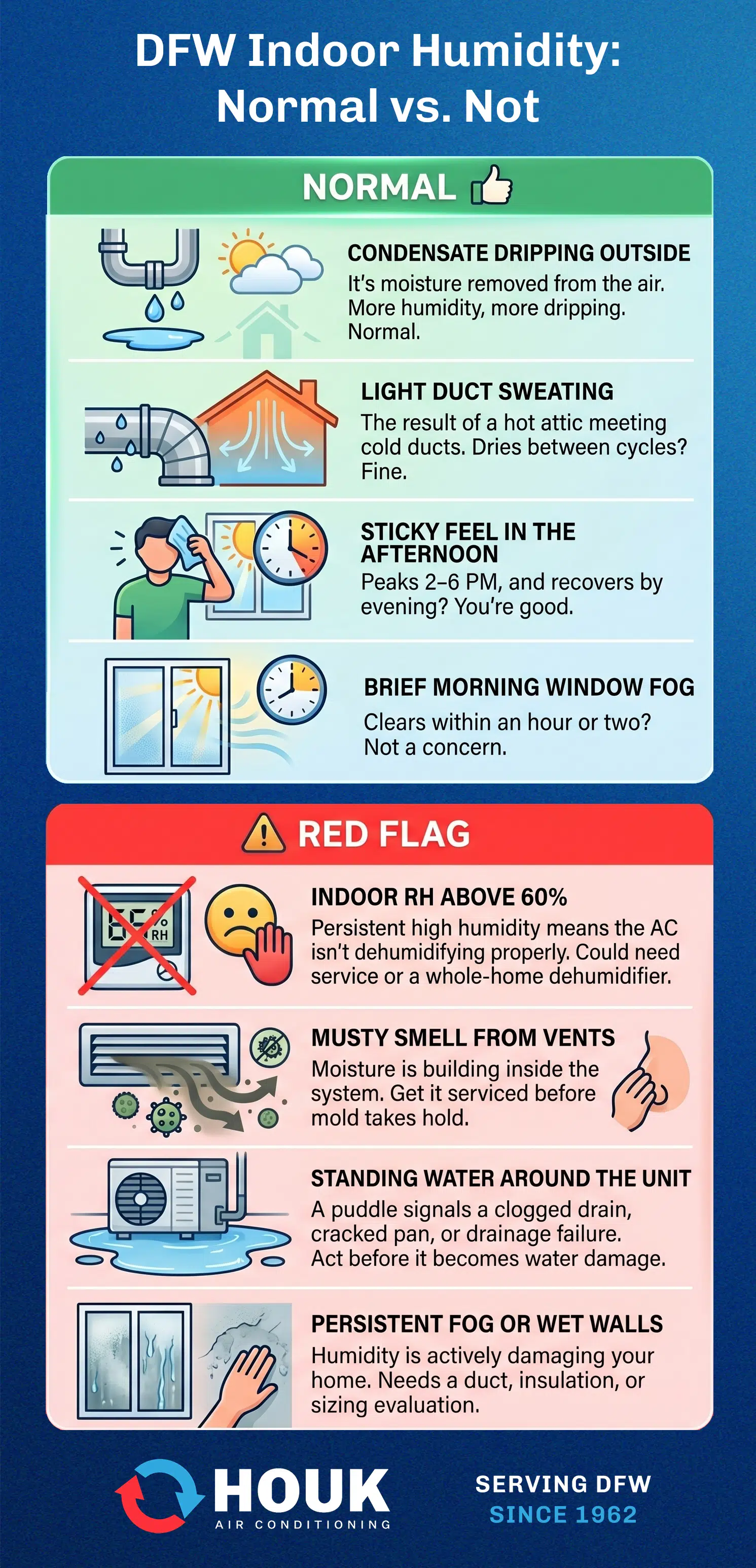
Some of what you’re noticing around the house right now is just your AC doing exactly what it’s supposed to do in this climate.
Condensate Dripping Outside
That steady drip from your condensate drain line on a hot day is your AC pulling moisture out of the air. More humidity means more water. On peak days in North Texas, a healthy system can produce a significant amount of condensate. It would actually be more concerning if it wasn’t dripping.
Light Duct Sweating
In a DFW summer, unconditioned attics build up significant heat. When that heat surrounds ducts carrying cold air, some surface condensation on the outside of the ductwork is expected. Same physics as a cold glass of sweet tea on a humid patio. If the sweating is light and dries between cycles, it’s not a red flag.
A Slightly Sticky Feel on Peak Afternoons
Even with the AC running, the hottest stretch of a DFW summer day can push indoor humidity up a few points temporarily. If the house feels a little heavy between 2 and 6 PM but recovers by evening, your system is keeping up. It’s just working harder during those hours.
Brief Morning Window Fog
A thin layer of condensation on windows in the early morning, especially on east-facing glass, can happen when overnight outdoor humidity is high and indoor surfaces are cool. If it clears within an hour or two, it’s a non-issue.
Humidity Signs That Point to a Real Problem
Not everything falls into the “that’s just Texas” category. These signs suggest your system isn’t managing moisture the way it should.
Indoor RH Consistently Above 60%
If a hygrometer reads above 60% for days at a time, regardless of your thermostat setting, your system may not be dehumidifying properly. The EPA notes that indoor humidity above 60% can contribute to mold growth. The cause could be an oversized unit that cools the air too quickly without running long enough to dehumidify, low refrigerant, or a failing component that’s cutting capacity.
Musty or Mildew Smell From the Vents
A persistent musty smell when the system kicks on usually means moisture is building up somewhere it shouldn’t, such as inside the air handler, on the evaporator coil, or in the ductwork. This isn’t a wait-and-see situation. Mold growth in the system circulates spores throughout the house.
Standing Water Around the Indoor Unit
A small amount of condensate in the drain pan is expected. A visible puddle on the floor around the unit means the drain line is clogged, the pan is cracked, or drainage is failing somewhere. Left alone, this leads to water damage and mold growth.
Persistent Foggy Windows or Wet Walls
If condensation on windows lasts all day or you’re finding damp spots on interior walls, indoor humidity has crossed from uncomfortable to potentially damaging. This can point to duct leaks pulling unconditioned attic air into the system, poor insulation, or a unit that isn’t sized correctly for the home.
What You Can Do and When to Call
A few things are worth checking on your own first.
1. Check These First
Pick up an inexpensive hygrometer. Once you know the humidity levels your home should have in summer, you have a real benchmark instead of just guessing. Make sure your air filter is clean, since restricted airflow reduces your system’s ability to dehumidify. And confirm that supply and return vents aren’t blocked by furniture or curtains.
2. When to Call an HVAC Professional
If your indoor RH stays above 60% after checking those basics, or if you’re noticing musty smells, standing water, or persistent condensation, a professional assessment makes sense. The issue might be a clogged drain line or a sizing mismatch, but either way, catching it early beats dealing with mold or water damage later.
3. When a Whole-Home Dehumidifier Makes Sense
When your system checks out but RH is still consistently high, a whole-home dehumidifier integrated with your HVAC system is worth discussing with a technician. It’s one of the more effective long-term solutions for DFW homes where outdoor humidity keeps pushing moisture levels up, regardless of how well the AC is running.
DFW Humidity Is Aggressive, but Your AC Should Be Handling It
Living in North Texas means accepting that summer humidity is part of the deal. Your AC is designed to manage it, and most of the moisture behaviors homeowners notice—dripping condensate, light duct sweating, a slightly heavy feel on the worst afternoons—are signs the system is working, not failing. The key is recognizing normal humidity in Texas home environments versus the signs that something needs professional attention, and acting before a manageable issue turns into real damage.
Get Houk AC's Help With Indoor Humidity and Whole-Home Dehumidifiers in DFW
If your home’s humidity doesn’t feel right this summer, don’t guess. Houk AC has been helping DFW families stay comfortable since 1962, whether that means diagnosing what’s driving your indoor humidity or installing a whole-home dehumidifier for lasting relief. Reach out today, and let’s figure out what your home actually needs.
Humidity over 55% at home? Schedule a Houk humidity check.