

On a hot afternoon, your phone buzzes: the state’s grid operator is asking Texans to cut back on electricity. If you’ve spent a summer in the metroplex, you’ve likely seen one of these before. It tends to arrive right when your air conditioner’s working its hardest. So does it mean shutting off the AC and sweating through the evening? Not at all.
Responding takes a few small, voluntary adjustments to keep your home cool, reduce strain on the grid, and, on some electricity plans, lower your costs, too. Here’s how DFW homeowners can approach it.
DFW ERCOT Alerts at a Glance
- An ERCOT conservation alert is a voluntary request to cut electricity use during peak hours, not an outage or a mandate.
- Pre-cool your home in the morning, then let the thermostat rise a degree or two during the alert window.
- Hold off on the dryer, dishwasher, oven, and pool pump until the window passes.
- A smart thermostat can run the whole routine on a schedule, and some utility plans turn it into bill savings.
ERCOT’s Alert Levels, Explained
ERCOT (the Electric Reliability Council of Texas) manages the power grid for most of the state. When summer demand climbs toward the limit of available supply, ERCOT asks the public to use less electricity for a set period. That period usually falls in the late afternoon and evening, when the whole region’s running its AC at once.
These requests are voluntary, and ERCOT frames each one with the phrase “if safe to do so.” The earliest signal is a Weather Watch, issued a few days ahead when hot weather and high demand are forecast. That heads-up is a good cue to start planning.
Voluntary Conservation Notice & Conservation Appeal
The two requests you’re most likely to see are a Voluntary Conservation Notice and, one step up, a Conservation Appeal. Both ask homeowners and businesses to reduce usage during a specific window when demand is high and reserves are tight.
A Conservation Appeal is the more urgent of the two, issued when conditions could push the grid toward emergency operations. Neither is an outage nor a mandate. They’re early, voluntary steps meant to keep the grid stable before stronger measures are needed.
When Things Escalate to Energy Emergency Alerts
If conservation requests aren’t enough and reserves keep falling, ERCOT moves into Energy Emergency Alerts, numbered one through three. These are grid-operation tools rather than homeowner instructions.
Here’s what each level means:
- Level 1: ERCOT taps every available power source, including electricity brought in from neighboring grids.
- Level 2: ERCOT trims demand by interrupting large industrial customers who’ve agreed to pause operations during emergencies.
- Level 3: As a last resort, ERCOT directs utilities to begin short, rotating outages to protect the grid as a whole.
Reaching Level 3 is rare, and the earlier conservation steps help avoid it.
What to Do During an ERCOT Alert in DFW
Getting through an alert comes down to shifting when and how hard your HVAC system runs, not shutting it off. A few coordinated moves around the peak window do most of the work.
Pre-Cool Before the Peak Window
The most effective step happens before the alert window starts. If you cool your home a little extra during the cooler, off-peak morning hours, the structure and furnishings hold that coolness and let you coast once demand peaks.
ENERGY STAR points to roughly after 9 p.m. and before 9 a.m. as off-peak in many areas, though your electricity provider is the best source for your exact schedule.
To pre-cool effectively:
- Bring the temperature down a few degrees in the morning, before outdoor heat climbs
- Keep it modest; overcooling wastes energy and can leave the house feeling clammy
- Close blinds on sunny west- and south-facing windows to hold the cool air in
Ease Your Thermostat Back During the Window
Once the conservation window begins, let the thermostat rise a degree or two. ERCOT lists this as one of the simplest ways to help, alongside holding off on heavy electricity use.
During the conservation window:
- Raise the setpoint one to two degrees for the length of the window
- Run ceiling fans so a slightly warmer room still feels fine
- Put health first: if anyone in the home is sensitive to heat, their safety comes before conservation
Why Cranking It Down Backfires
When the house feels warm, the natural move is to push the thermostat lower to cool things down faster. That instinct backfires. The thermostat sets a target temperature; it doesn’t control how fast the system cools. Your AC runs at the same steady rate either way, so a lower setting just makes it run longer and use more energy. After a morning pre-cool, nudging the setting up during the conservation window keeps the house livable while lowering demand.
What to Skip Until the Window Passes
Large appliances draw heavy loads and add heat and humidity that your AC must remove. Both ERCOT and ENERGY STAR suggest shifting them to off-peak hours.
Until the conservation window passes, hold off on:
- Running the clothes dryer, dishwasher, and oven
- Running the pool pump, which can shift to overnight or early morning instead
- Non-essential lights and electronics, which you can turn off and unplug
- Cranking the thermostat far down, since it adds load without cooling any faster
Letting a Smart Thermostat Handle It
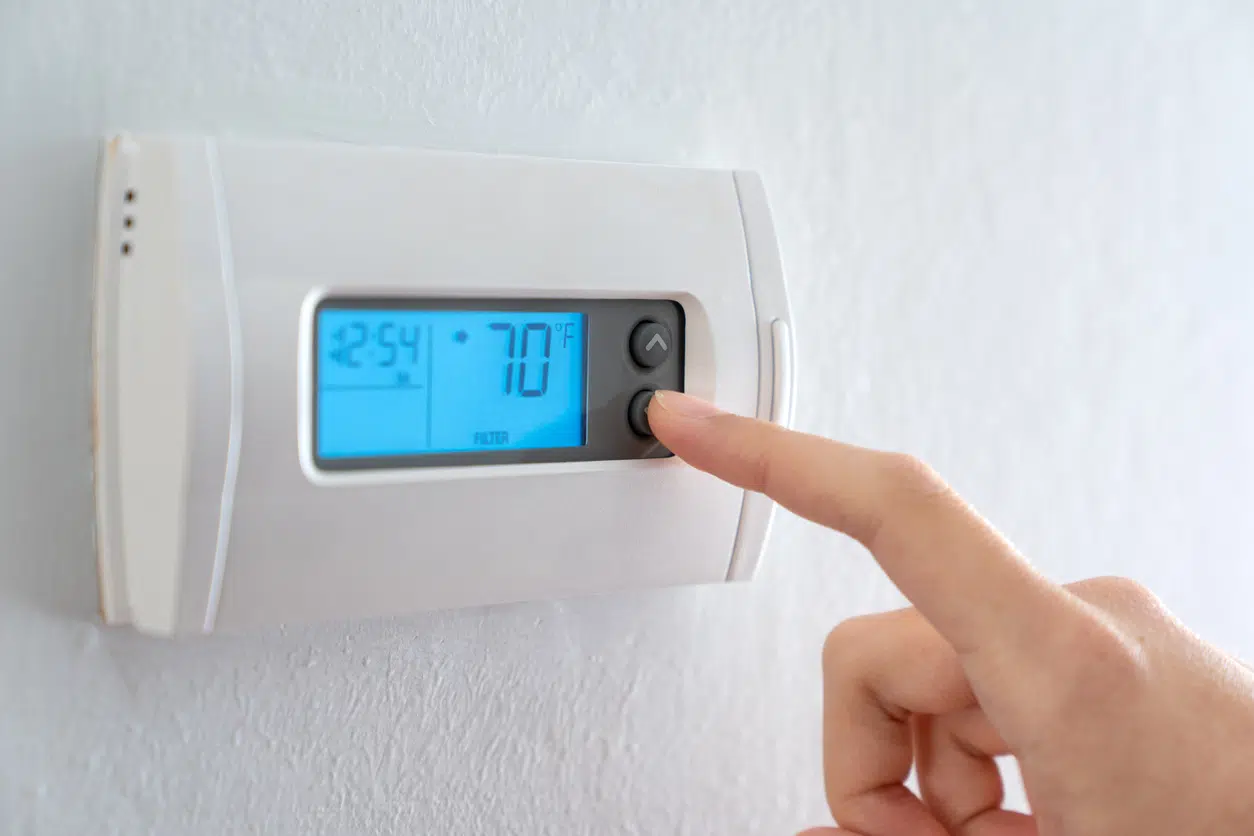
Timing all of this by hand is workable, but easy to forget on a busy afternoon. Installing a smart thermostat takes most of the guesswork out of responding to an HVAC grid alert in Texas by running the pre-cool and setback on a schedule you set once.
Many models hold a weekday plan that cools the home in the morning and eases back during the typical late-day peak, and some integrate with utility programs directly.
To automate your response:
- Program a morning pre-cool and an afternoon setback aligned to your electricity provider’s peak hours
- Look for a demand-response or peak-savings program from your electricity provider; many offer bill credits for letting the thermostat adjust a few degrees during grid events
- Use the app to bump the temperature up remotely if an alert lands while you’re away from home
Staying Comfortable Through a DFW Summer
Conservation alerts have become a familiar part of summer in North Texas, and the response stays simple: pre-cool while power’s plentiful, ease back during the peak window, and delay the heaviest electricity use until it passes.
Together, those habits keep your home cool and help the grid hold steady on the hottest days, with the AC still running. If you’re on a time-of-use plan or a utility demand-response program, they can show up as savings on your bill, too.
Prepare Your DFW Home for the Next Grid Alert With Houk AC
When the next alert lands, it helps to know your AC can handle whatever the grid and the heat throw at it. Houk Air Conditioning has kept DFW homeowners cool since 1962, with recommendations you can trust. Our technicians work for you, not a sales quota.
Want a hand setting up a smart thermostat schedule, or a quick check that your system’s ready for peak-demand season? Call Houk Air Conditioning or book online today.