Every 90 days is the filter interval most homeowners have heard, and it’s a reasonable place to start. It also assumes average runtimes and an average household, which is rarely what winter looks like.
Once the heat comes on, your system runs longer, the windows stay shut, and everyone spends more time indoors. More of that dust, hair, and dander circulates through your system, and longer runtimes push more of it through the filter each day.
Choosing a filter adds its own confusion, since the highest-rated option on the shelf isn’t automatically the best one for your system. Here’s how to set a realistic winter schedule and pick a rating that works with your equipment.
How Often to Change Air Filter at a Glance
- Baseline: Houk recommends replacing your air filter every 90 days in a typical home, and more often with pets, allergies, or asthma in the household.
- Heating season: Check the filter monthly and replace it whenever it looks dirty.
- Busy households: Pets, allergies, and holiday guests all load a filter faster, so expect to change it sooner.
- MERV rating: Higher ratings trap smaller particles, but the best choice is the highest rating your system fan and filter slot can accommodate.
- Professional help: An HVAC technician can confirm which filter ratings and sizes your system supports.
Winter Runtimes and How Often to Change Furnace Filter
In most central systems, heating and cooling run through the same blower and the same filter. The filter slot that served your AC all summer now serves your heating, too, and winter pushes more air through it.
A filter only catches particles while air is moving through it, so every extra heating cycle adds to the load. ENERGY STAR counts winter and summer as heavy-use months and recommends a monthly filter check during both, with a replacement at least every three months.
How a Closed-Up House Speeds Up Filter Buildup
A closed-up house adds to the problem. When too little outdoor air comes in, indoor pollutants can build up. In winter, more of the dust and dander your household creates stays inside and cycles back through the return vents.
Staying on schedule also protects the rest of the system. A clean filter keeps dust from building up in the equipment and ducts, which is one reason duct cleaning is rarely the first fix for a dusty house.
When to swap: Check the filter monthly from the first cold snap through early spring, and replace it whenever the surface looks gray or coated. No technician required, though Houk can also replace it during a fall heater maintenance visit.
What Shortens the Time Between Filter Changes
Heating season shortens the interval for every home. A few household factors shorten it further.
Pets
Dogs and cats shed hair and dander year-round, and in winter they spend more time indoors. That hair collects across the filter quickly, especially in homes with multiple pets or a heavy-shedding breed.
When to swap: Check every few weeks through heating season, and replace the filter once hair starts covering the pleats. No tools or technician needed.
Allergies and Asthma
For households with allergies or asthma, the filter matters more than usual. A clogged one lets dust and allergens recirculate through your rooms, right where sensitive family members spend their time.
When to swap: Stay on the short end of your schedule, and ask a technician about the highest-rated filter your system can handle. The next section covers how to choose that rating.
Holiday Guests
A full house over Thanksgiving and the holidays means more cooking, more foot traffic, and more doors opening to outside dust. Guests who bring their own pets add another layer of hair and dander, even for a short visit.
When to swap: Put in a fresh filter before guests arrive, then check it again after they leave. This one needs no technician.
Finding the Right MERV Rating Airflow Balance
Picking a filter means weighing how much it catches against how easily air moves through it.
What the MERV Scale Measures
MERV stands for Minimum Efficiency Reporting Value. It’s a 1-to-16 scale that measures how well a filter captures particles between 0.3 and 10 microns, and higher numbers trap smaller particles more effectively. That makes the highest number on the shelf look like the obvious pick.
The catch is resistance, since denser filter material takes more effort for your blower to pull air through. If your system can’t overcome that resistance, it moves less air through the house.
Restricted airflow wastes energy and makes the system work harder to keep your home warm. Airflow problems can cut a system’s efficiency by up to 15%.
Choosing a Rating Your System Can Handle
If you’re upgrading, EPA guidance points to a filter rated MERV 13 or higher, as long as your system fan and filter slot can accommodate it. Most systems can handle MERV 13 without equipment problems when the filter gets replaced frequently.
That replacement condition is easy to overlook. A dense filter that’s also overdue for a change restricts airflow on two fronts.
Before you upgrade: Check your system’s documentation, or ask a technician which filter ratings and sizes it supports. A technician can also tell you whether the system can be modified to take a higher-rated filter.
Filter Fit and Whole-Home Air Cleaning
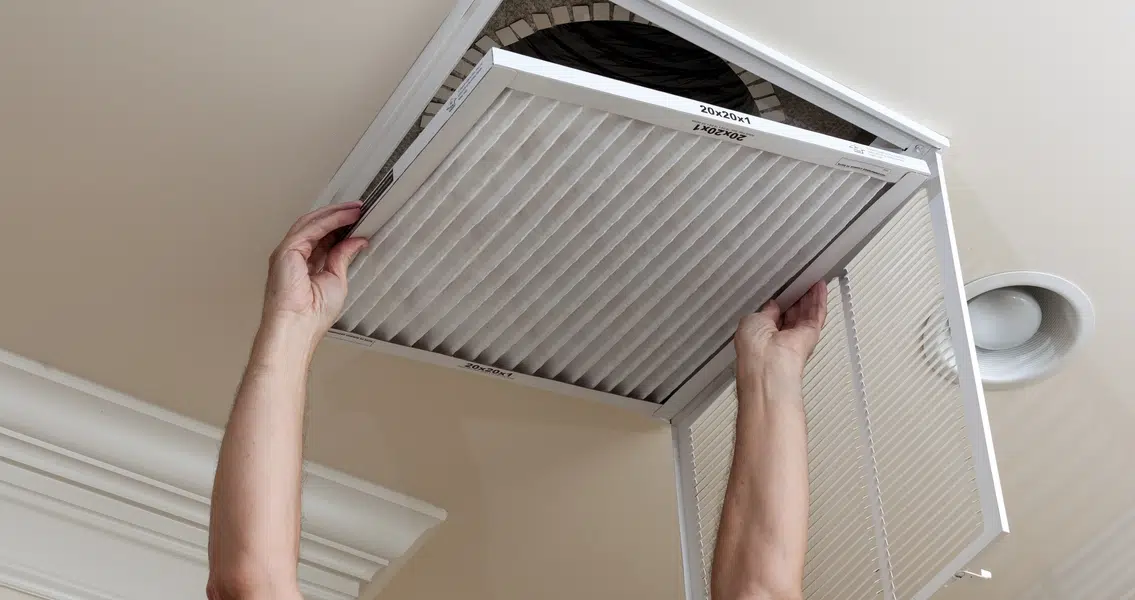
Fit matters too. The filter should sit snugly so air can’t slip around its edges, without any bending or crushing to make it fit.
For households that want more air cleaning than the filter slot allows, a whole-home air purifier installs inside the ductwork and works alongside your filter.
Let the Old Filter Set Your Schedule
Your own filters are the most reliable guide to how often your home needs a change. Write the install date on the frame each time, and take a close look at the old filter when it comes out.
If it’s heavily coated before the planned change date, shorten the interval. If it still looks fairly clean at three months, your household is on the lighter end. A standard 1-inch filter should still come out at that point, while thicker media filters can follow the manufacturer’s longer interval. Filter checks also pair easily with a few other low-effort maintenance habits that keep small problems from turning into repairs.
Building a Filter Schedule That Fits Your Home
Ninety days works as an upper limit, and in winter many homes will need a change well before then. Check the filter monthly while the heat is running, shorten the interval for pets, allergies, and a full holiday house, and use each old filter to fine-tune the timing. When you buy a replacement, choose the highest MERV rating your system supports and change it often enough that it never starts working against your airflow.
Schedule DFW Air Filter Replacement With Houk AC
If you’d rather not keep a filter calendar at all, Houk AC can take it off your list. Our technicians replace filters during seasonal tune-ups, and Total Shield members get two standard filter changes a year plus an annual indoor air quality check.
Prefer to handle it yourself? You can order filters online and have them shipped to your door.
Dallas-Fort Worth homeowners have trusted Houk with their heating and cooling since 1962. Contact us to schedule a filter replacement or get help choosing the right rating for your system.
Schedule a tune-up with our team or reach out with questions about your current coverage.