
At a Glance:
-
Manual thermostats
-
Low-cost, old-school devices that require you to adjust the temperature and turn the system on or off yourself.
-
Best for: Very simple setups and users who do not mind frequent manual changes.
-
-
Programmable thermostats
-
Digital thermostats that let you set daily or weekly schedules so heating and cooling adjust automatically.
-
Best for: Households with regular routines that want better comfort and energy savings without constant manual control.
-
-
Smart thermostats
-
Wi-Fi-enabled thermostats you can control from a smartphone, often with energy reports, learning features, and filter/maintenance alerts.
-
Best for: Tech‑savvy, busy homeowners who want maximum convenience, remote access, and long‑term efficiency.
-
If you are comparing a Smart Thermostat vs a Programmable Thermostat for your home, understanding how each one controls temperature and energy use is essential.
Think about the moment you walk through your front door after a busy day, and the air inside feels exactly how you like it. That comfortable feel is not luck; it is the result of a small control device on your wall managing the temperature for you. That device is the thermostat, and it quietly has a huge impact on how your home feels and how much you pay to heat and cool it.
People often mix up thermostats with thermometers, but they do very different jobs. A thermometer shows you how warm or cool a space is. A thermostat tells your heating or cooling system to change the temperature. It also checks the room temperature. If it is not at your desired level, it signals the furnace or air conditioner to turn on or off. This continues until the room is back to your desired temperature
In just a few decades, these devices have changed a lot. They went from simple, turn-the-dial models to smart, Wi-Fi-enabled controls. These new devices can follow schedules, learn your routine, and help save energy. No matter if you live in an old house or a smart home, picking the right thermostat can make your space comfy. It can also help you manage your energy bills better.
Types of Thermostat and How They’ve Changed
Most home thermostats today fit into three broad categories: manual, programmable, and smart.
-
Manual thermostats: Traditional dial or basic digital models adjusted only by hand.
-
Programmable thermostats: Digital controls that let you set schedules so the temperature changes automatically throughout the day or week.
-
Smart thermostats: Connected, Wi‑Fi-capable devices with app control, learning features, and advanced energy tools.
Each step up adds more control and convenience. Manual versions are simple but limited, programmable models add automation and greater efficiency, and smart thermostats layer in connectivity, learning, and detailed usage data.
Manual Thermostats: Basic but Limited
Manual, or “basic,” thermostats are the most straightforward option. Many older homes still have the round or rectangular unit. You can turn a dial or lever to choose your preferred temperature. Once you set it, the system turns on and off around that setting, but nothing changes unless someone adjusts it again.
Some newer manual units have a simple digital screen and up/down buttons rather than a dial. Even so, you still need to remember to turn the setting down before leaving for the day or raise it when you come home. There is no built-in scheduling, so comfort and energy use depend heavily on how often you interact with the device.
Advantages of Manual Thermostats
-
Easy to understand and operate, with almost no learning curve.
-
Low purchase price compared with more advanced models.
-
A workable choice for small spaces or situations where the temperature rarely needs to change.
Drawbacks of Manual Thermostats
-
No automatic schedule; the system runs at the same setting until you change it.
-
Easy to waste energy if you forget to adjust the temperature when you leave or go to bed.
-
Less precise management of comfort and efficiency than modern alternatives.
Because of these limitations, manual thermostats often end up costing more in long-term energy use, even though they are cheaper to buy.
Programmable Thermostats: Adding Automation
Programmable thermostats were designed to solve the “set it and forget it” problem without requiring constant attention. With this type of thermostat, you can create a schedule for different times of day or different days of the week. For example, you might have the temperature ease back while everyone is out during the day and then warm or cool the home again shortly before you arrive.
Key Features of Programmable Models
-
Multiple daily time periods, often with weekday and weekend settings.
-
A digital display showing current temperature and setpoint.
-
Automatic changes based on the schedule you program instead of manual adjustments throughout the day.
Energy Use and Potential Savings
By letting the thermostat automatically reduce heating or cooling when you don’t need it, many households can lower their bills. Energy agencies say that lowering the temperature by a few degrees can help save money. If you do this for at least eight hours a day, you can reduce heating and cooling costs by about 10 percent. This works best if you do it regularly. The actual savings vary by climate, size of home, and how well the schedule is set, but most sources agree that a well-used programmable thermostat is more efficient than leaving a manual model at one constant setting.
Setting up the schedule does take some thought. You need to consider work hours, sleep times, and when the home is usually empty to get the best balance of comfort and savings. Some people also use temporary overrides when routines change, but the programmed pattern remains the backbone of the system.
Who Benefits Most from a Programmable Thermostat?
Programmable thermostats are especially useful for homes with predictable daily routines. Households where people leave and return at the same times each day can benefit from scheduled temperature changes. For many families, this style of thermostat is a comfortable middle ground between very basic controls and the more complex features of smart devices.
Smart Thermostats: Connected and Adaptive
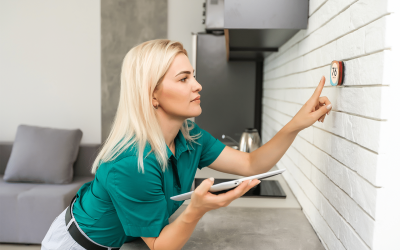
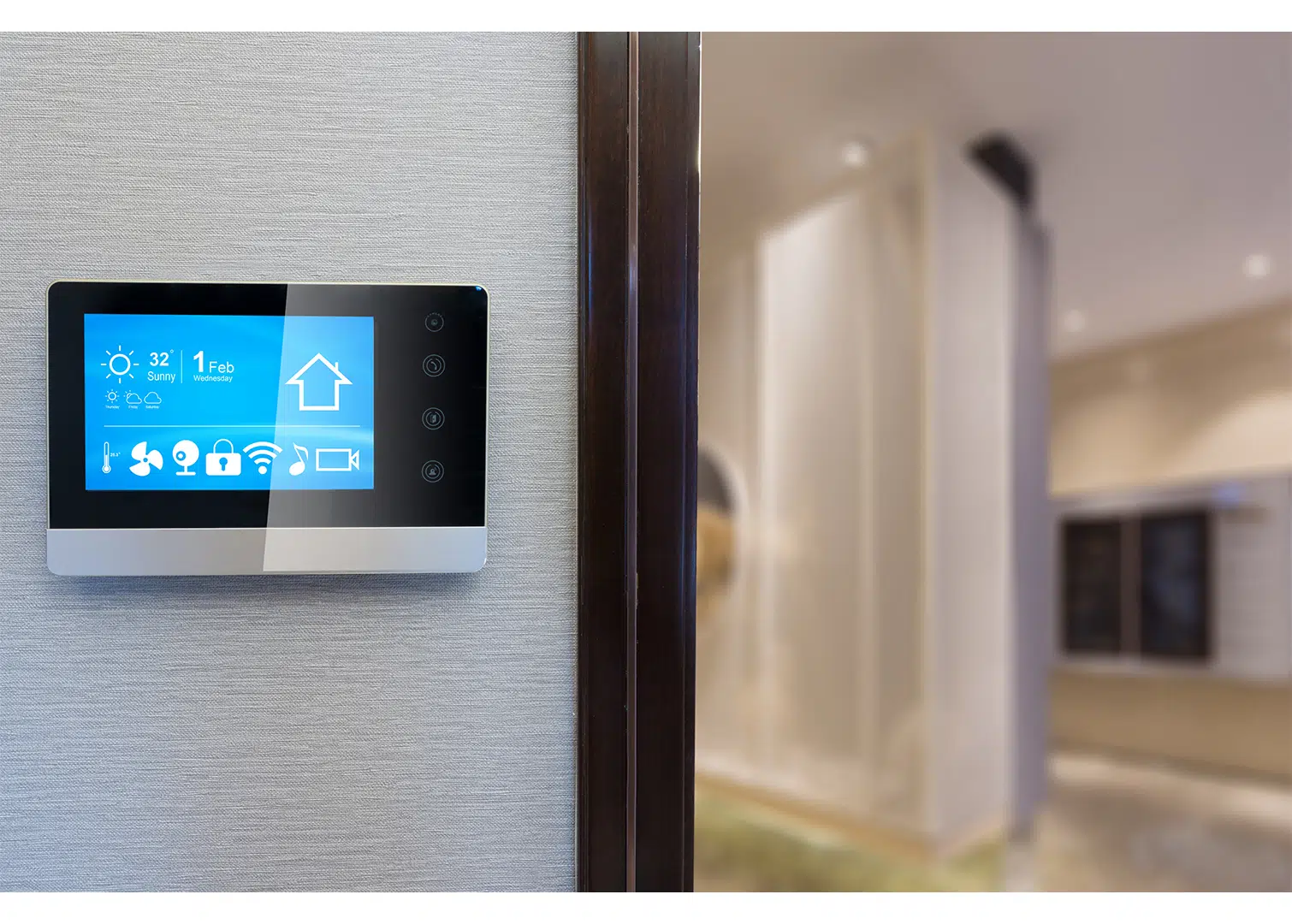
Smart thermostats take the idea of automatic control several steps further. They connect to your home’s Wi-Fi. This lets you manage the temperature using a smartphone app, tablet, or website. You can change settings when you are away, check in while traveling, or adjust things from the couch without walking over to the wall unit.
Many smart thermostats track patterns. They notice when you change the temperature or when people are home. They use this information to improve their operation over time. Some models include geofencing, which uses your phone’s location to shift into an energy‑saving mode when you leave and restore comfort as you head back.
Key Capabilities of Smart Thermostats
-
Remote control through dedicated apps and, often, voice assistants.
-
Learning features that build schedules from your behavior and preferences.
-
Detailed energy reports, so you can see how and when your system is running.
-
Integration with broader smart home ecosystems and devices.
-
Notifications about maintenance, such as air filter changes or possible system issues.
Why Many Homeowners Choose Smart Options
Smart thermostats attract people who want convenience and want to see their energy use. They also let you control your home when you are away. While they cost more at first than manual or basic models, their automation and feedback can reduce energy use. This also improves comfort, especially in homes with changing schedules. They also work well in connected homes. Other devices, like lights and security systems, are controlled through apps or voice commands.
Comparing Manual, Programmable, and Smart Thermostats
When choosing a thermostat for your home, consider your daily routine. Think about how often your schedule changes. Also, decide if you want remote access or information about your energy use.
-
For simple needs and the lowest initial cost, a manual thermostat can work, but it requires you to remember every adjustment.
-
For better control and automatic temperature changes without going fully “smart,” a programmable unit is often a strong choice.
-
For the best convenience, insight, and savings in a connected home, a smart thermostat has the most features
Before buying, make sure the thermostat you want works with your heating and cooling system. If it’s a smart model, check that you have a good Wi-Fi connection where you will install it.
Looking Ahead: Thermostats as Home Climate Managers
What used to be a simple temperature dial has become a central piece of home energy management. Modern thermostats do more than just turn equipment on and off. They look at patterns and respond to where you are. They also work with other smart devices to keep your home comfortable and efficient. As utility costs rise, many people are interested in sustainability. Using the right thermostat can improve comfort. It can also help save on energy costs.
Your choice of thermostat matters. It can impact your home’s comfort and how well the system works. You can choose between simple controls or advanced automation. Houk Air Conditioning can help Dallas and Fort Worth homeowners decide which option fits their household needs.
Our Customers Also Ask
-
Is a smart thermostat really worth it over a programmable thermostat?
Yes, if you value convenience and flexibility, a smart thermostat is often worth it because it can adjust automatically, provide app control, and fine‑tune settings to save energy without constant manual changes. -
Will a smart thermostat work with my existing HVAC system?
Most smart thermostats work with common single‑stage and many multi‑stage systems, but compatibility is not guaranteed, so it is best to have an HVAC professional like Houk Air Conditioning confirm before you buy. -
Can a programmable thermostat save as much money as a smart thermostat?
When programmed correctly and used consistently, a programmable thermostat can deliver similar energy savings on paper, but many homeowners get better real‑world results from smart thermostats because they automate more of the energy‑saving behavior. -
How do I know which thermostat type is best for my home?
If your schedule is very predictable, a programmable thermostat may be enough, but if your routine changes or you want remote control and insights, a smart thermostat is usually the better long‑term choice. -
Why is my furnace not turning on even though I changed the thermostat settings?
If your furnace will not start, first check that the thermostat is set to “heat,” the temperature is set above the room temperature, and the breaker, gas supply, and air filter are all in good shape; if it still will not run, call a qualified HVAC technician like Houk Air Conditioning to inspect the system.
Curious to learn more? Call Houk Air Conditioning at (833) 366-7644 to set up a consultation. Find out firsthand why so many Texans trust Houk as their DFW comfort experts.